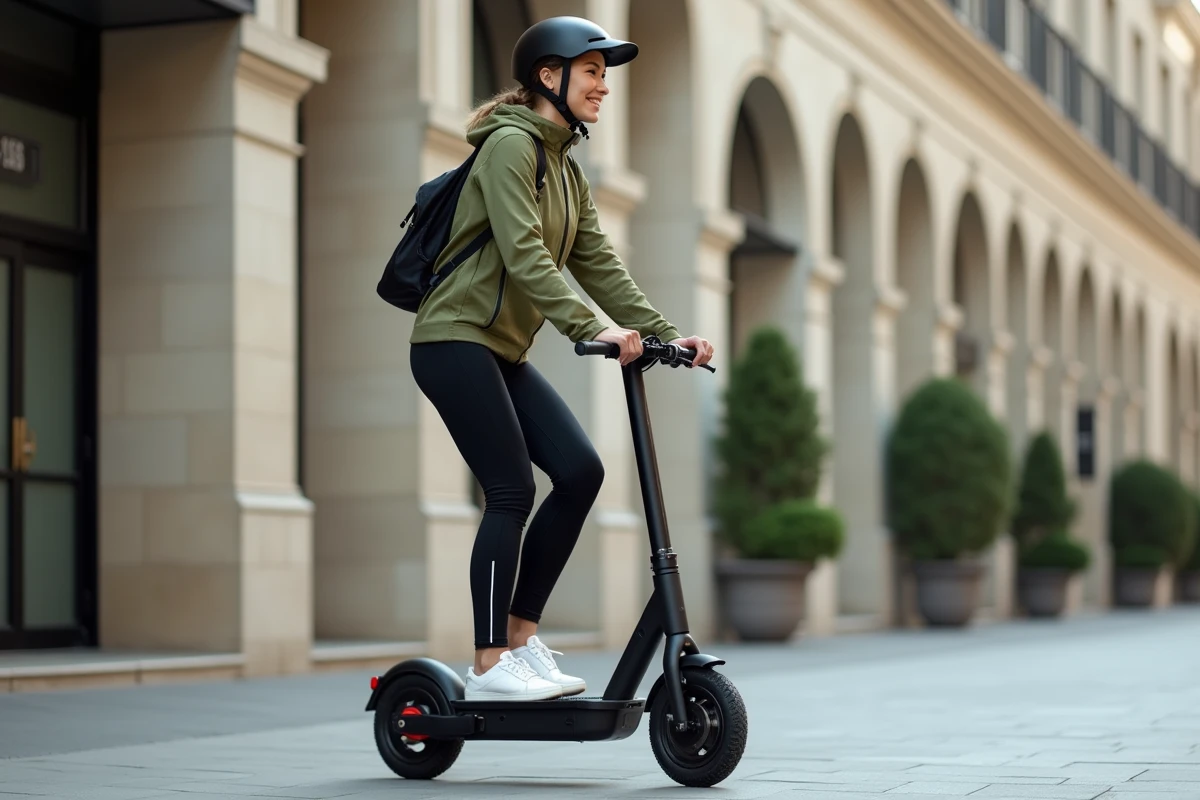
Riding in light rain at 25 km/h with cotton jeans and low-top sneakers is the kind of experience that vaccinates you. The wind penetrates the fabric in seconds, your feet get soaked, and visibility decreases without any preparation to signal yourself. On an electric scooter, you are exposed just like on a bike, with an aggravating factor: the standing position offers even more exposure to the cold and the elements.
The choice of clothing for riding an electric scooter is not about style, but about safety and thermal comfort. Each piece worn serves a specific function, from the helmet to the shoes, including the mid-layers.
Head protection and visibility: two functions, one piece of equipment
The helmet remains the first reflex and the most cost-effective in terms of protection. For personal electric mobility devices (EDPM), regulations require cautious behavior, but wearing a helmet is only mandatory for those under 12 years old. However, it is recommended for all users, regardless of the journey.
An urban bike helmet is more than sufficient. Models with an integrated visor protect the eyes from rain and insects without needing to add glasses. In winter, a thin technical fabric balaclava can be worn underneath to insulate from the cold without compromising fit.
For visibility, a reflective vest or armband is mandatory at night. During the day, wearing bright colors on the upper body is also beneficial. If you are looking for clothing advice for electric scooters suitable for each season, the topic goes well beyond just a yellow vest.
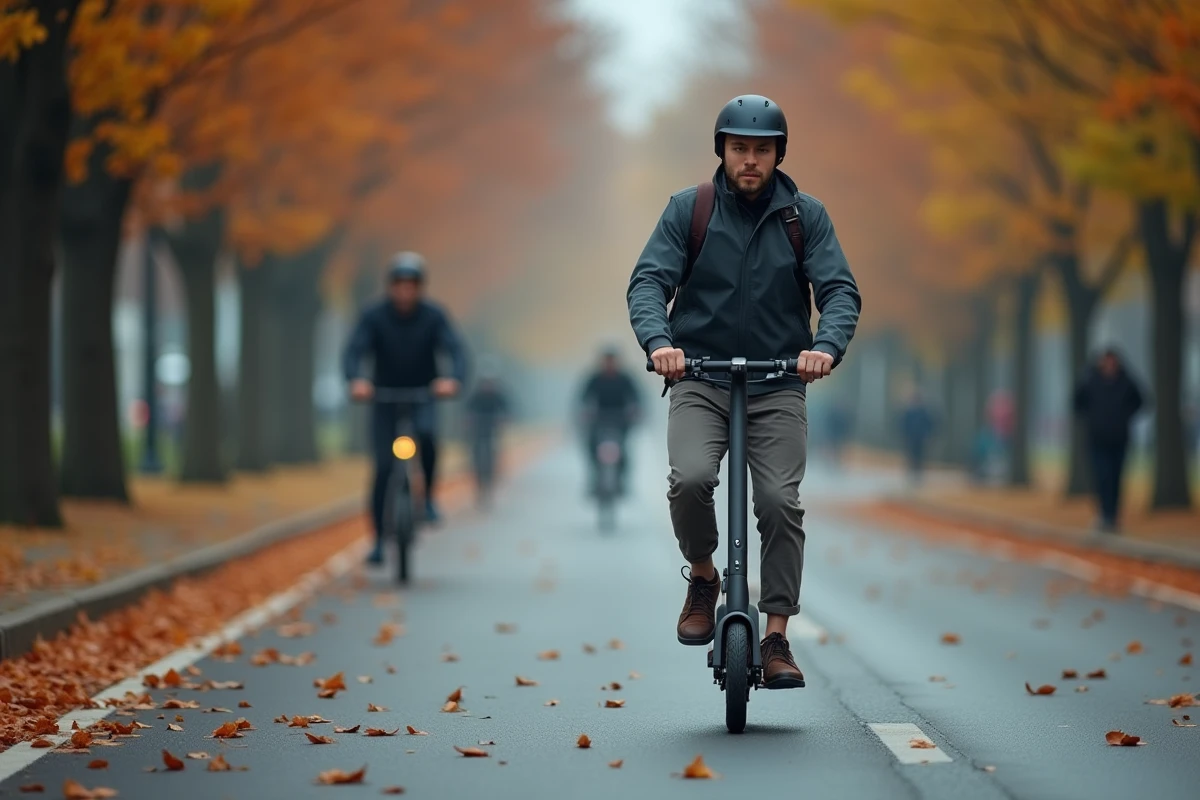
Dressing the upper body for riding an electric scooter in cold weather
The principle of three layers, well known in hiking, applies directly here. The difference with walking is that you produce almost no body heat while riding. The body cools down quickly, especially around the torso and arms extended towards the handlebars.
Base layer: wicking moisture
A technical base layer made of synthetic material or merino wool keeps the skin dry. Cotton should be avoided: it absorbs sweat, does not dry, and accelerates cooling.
Mid-layer: retaining heat
A thin fleece or a vest made of synthetic fibers serves this purpose. Opt for a fitted cut that does not hinder arm movement on the handlebars. If too loose, the mid-layer creates pockets of cold air when the wind rushes in.
Outer layer: blocking wind and rain
A water-repellent windbreaker, ideally with ventilation zips, provides the best compromise. Models designed for cycling are perfectly suitable for electric scooters: they are cut longer in the back and often feature integrated reflective strips.
- High closure at the neck to block drafts
- Adjustable Velcro cuffs that do not slip on the handlebars
- At least one zippered pocket accessible without letting go of the handlebars (chest pocket)
Lower body and shoes: the most neglected areas
People think of the jacket, but rarely of the pants. The lower body takes just as much wind as the upper body, and the ankles are the first to suffer from the cold in winter.
A thin windproof pant over jeans or work pants radically changes comfort on a journey longer than ten minutes. Rain overpants for cyclists are easily found and can be rolled up in a backpack.
For shoes, two criteria matter most: the sole and waterproofing. The sole should be flat and non-slip to grip the scooter deck, especially when wet. High-top shoes protect the ankle in case of a fall and block cold air entry.
Long-laced shoes pose a real risk if a lace gets caught in the rear wheel. Choose models with short closures, or systematically tuck the laces into the shoe.
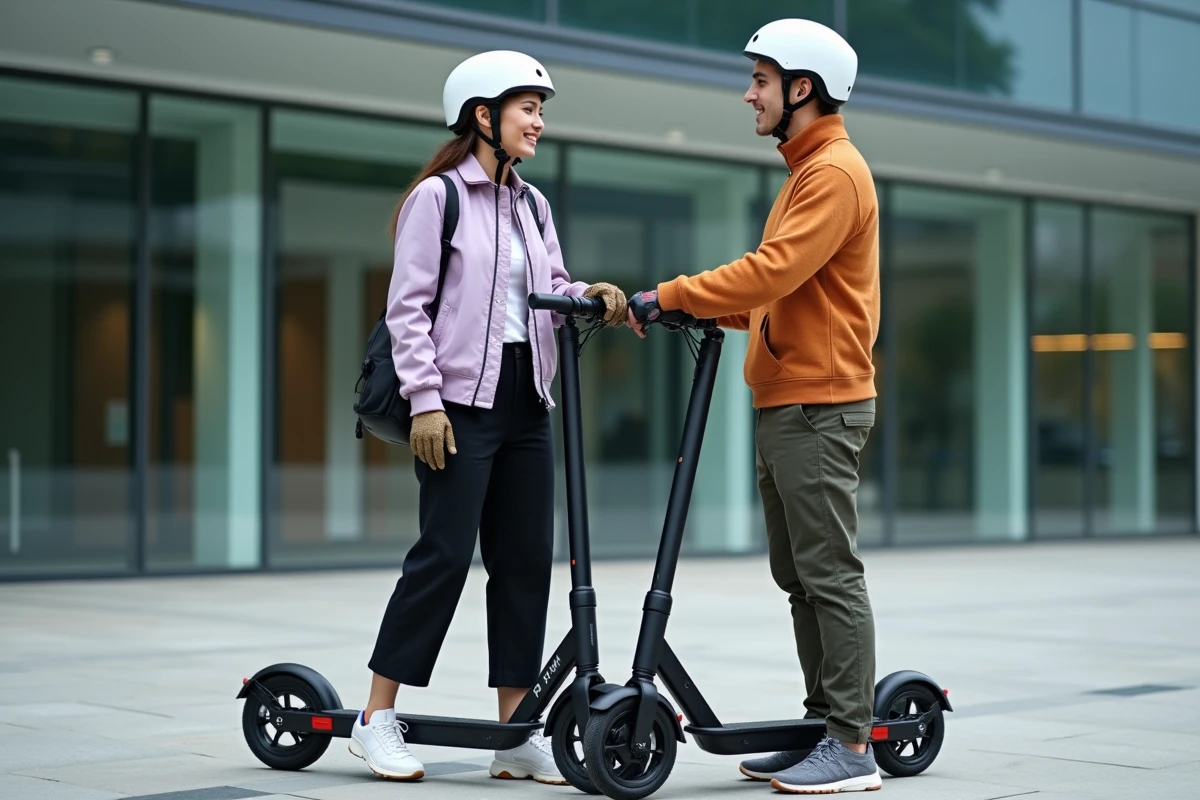
Protecting hands on the handlebars: gloves suitable for scooters
The hands are the constant point of contact with the scooter. They endure vibrations, cold, and rain without interruption. Below 10 °C, riding without gloves reduces finger sensitivity and makes braking less precise.
Thin gloves with reinforced palms allow you to maintain control of the brake and accelerator without losing dexterity. Bike models with a non-slip insert on the palm work well. In winter, upgrade to lined gloves, but ensure you can still operate the controls without straining.
Handlebar mitts, attached directly to the scooter, offer an effective alternative in extreme cold. They completely eliminate exposure to the wind. Feedback varies on this point depending on the scooter models: some handlebars that are too wide or too narrow make the attachment unstable.
Adapting your outfit for the home-to-work scooter commute
The real challenge for many electric scooter riders is arriving at work presentable. You can’t always change on-site.
The most practical solution is to wear your protective clothing over your work outfit, then remove it all upon arrival. This requires outer layers that are easy to put on and store:
- Windbreaker that folds into its own bag
- Light overpants with zippered side openings (can be put on without removing shoes)
- Waterproof shoe covers to protect city shoes
- A backpack with a ventilated compartment to store removed layers
Riding an electric scooter with a loose scarf or a floating scarf is dangerous: the fabric can get caught in the wheel or the folding mechanism. Opt for a fitted tubular neck gaiter without dangling ends.
The ideal outfit for the scooter does not exist as a category on the shelves. It consists of pieces borrowed from cycling, hiking, and urban daily life, assembled according to the weather and the duration of the journey. The most effective approach is to test your combinations on a few short trips before committing to a full home-to-work route.