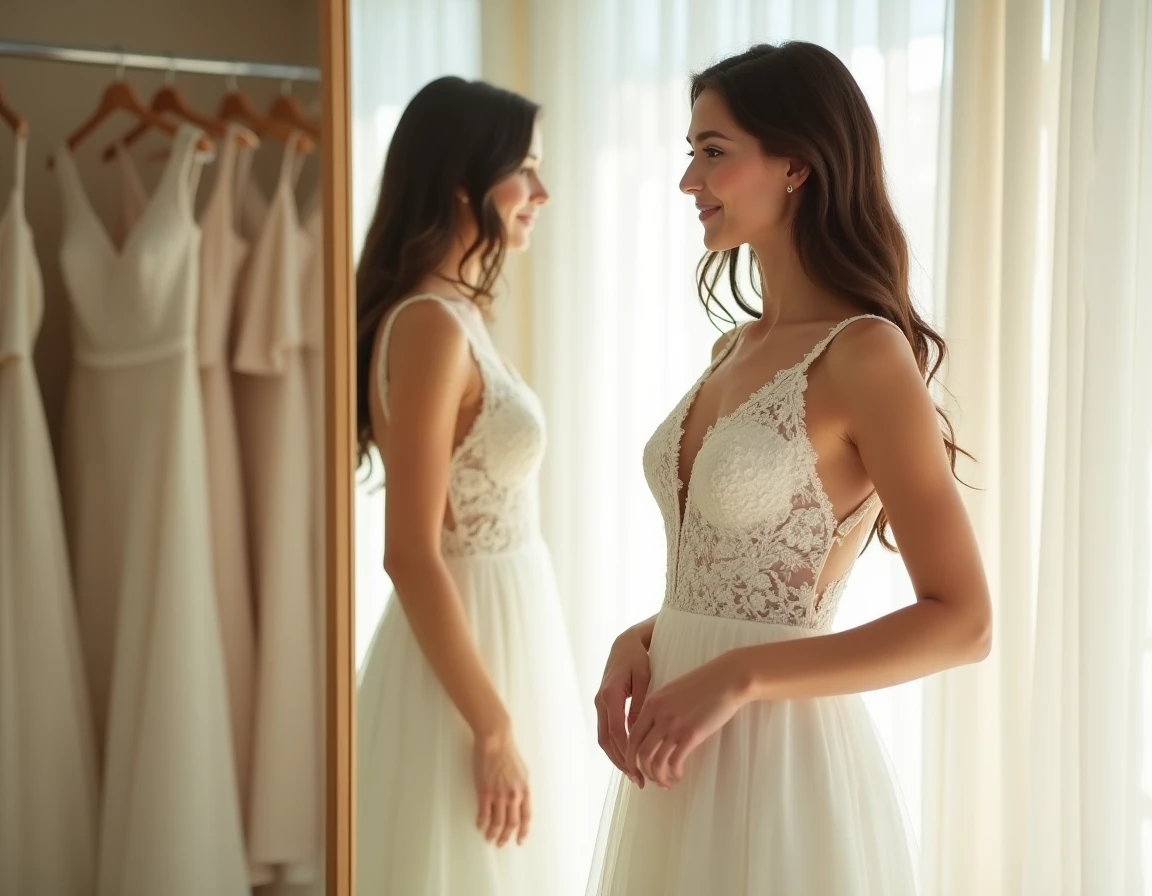
The term “faithful girls” primarily refers to a French brand of wedding dresses, based in Bordeaux, Nice, and Paris. Its creations are made in workshops in France, England, and Eastern Europe. Beyond the brand, the expression refers to a philosophy of wedding choice: to favor a dress that corresponds to one’s true personality rather than an image imposed by conventions.
Location and ceremony constraints in choosing a wedding dress
Before even discussing style or personal taste, a factor often overlooked guides the choice of the dress: the physical constraints of the ceremony location. Town halls with narrow staircases, venues classified as historical monuments, mandatory accessibility – these practical elements increasingly lead future brides to forgo very voluminous skirts or cathedral trains.
This is not a trivial detail. Wedding planners and venue managers regularly report these restrictions. A bride who has spotted a classified castle for her civil ceremony may find herself forced to adapt her outfit at the last minute if the width of the doors or the configuration of the staircases has not been checked in advance.
To delve into the secrets of the faithful girls and their dresses, one must start from these practical considerations that online reviews rarely mention.
- Check the dimensions of the access points (doors, corridors, staircases) of the ceremony and reception venue before trying on a voluminous dress
- Ask the venue manager if there are any restrictions related to heritage classification or accessibility
- Plan a movement trial with the dress in conditions close to reality (walking, sitting, climbing stairs)

Re-wearable wedding dress: an underlying trend in France
In recent years, wedding dress shops in France have noted a significant increase in requests for re-wearable dresses. The principle: to choose a dress that the bride can wear again after the wedding, at an evening event, cocktail party, or another occasion.
This trend translates into concrete choices of silhouette. Two-piece models allow for wearing the top or bottom separately. Short or transformable dresses (with removable trains) offer a second life to the garment. Creations without trains, in crepe or simple satin, transition from an intimate wedding to a dressed-up evening without modification.
Economic and ecological motivations
The budget for a wedding dress represents a significant item in wedding expenses. Being able to wear it again justifies the investment for brides who refuse to let such a crafted garment serve only one day. The reasoning is also ecological: reducing textile waste by extending the garment’s lifespan.
French designers like Donatelle Godart or Maison Lemoine document this evolution in their recent collections. Multi-brand shops confirm that the question “will I be able to wear it again?” comes up during the majority of fitting appointments.
Minimalist silhouettes and decline of the princess cut
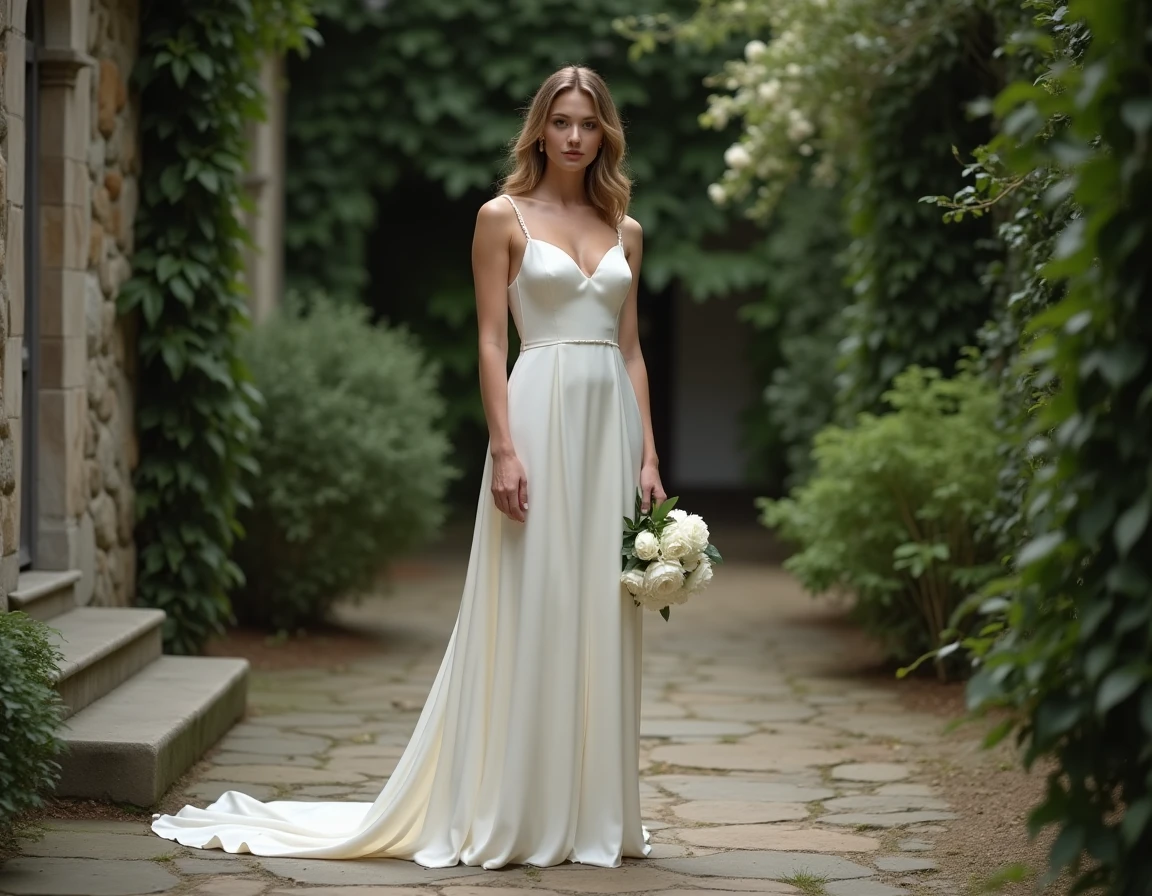
The 2024-2025 collections from leading French brands (Rembo Styling, Rime Arodaky, Laure de Sagazan) show a clear decrease in demand for very voluminous princess cuts. Future brides are increasingly turning to fluid silhouettes: slip dresses, clean lines in crepe, fitted dresses without embellishments.
This evolution is partly explained by the rise of intimate weddings and micro-weddings. With fewer guests and more modest venues, a monumental dress seems disproportionate. The style of the entire day is altered: outdoor photos in a natural setting, casual cocktail, short evening.
What this changes for accessories and photos
A minimalist dress shifts the focus to other elements of the outfit. Accessories take on a central role: statement earrings, colorful shoes, elaborate hairstyles. The photographer also adapts their work, as a fluid dress is photographed differently than a crinoline dress.
Brides who choose minimalism rarely do so by default. It is a bold style choice, often developed over months, which requires resisting social pressure of “it has to be impressive.” The memories of the day are no less significant.
Value for money and artisanal production of wedding dresses
Les Filles Fidèles, like other brands positioned in the mid-range segment, highlight models made in artisanal workshops. The materials offered (lace, tulle, silk, chiffon, organza) vary by collection, but the common point remains small-batch production.
For the future bride, understanding the production chain helps assess the displayed price. A dress sewn in a French or European workshop with custom adjustments does not have the same cost structure as an imported industrial model. The quality of the finishes (inner seams, lining, closures) can be checked during the fitting.
- Examine the inner seams and the cleanliness of the finishes, including at the armholes and hem
- Verify that the main fabric and lining are identified (composition displayed on the label)
- Ask if alterations are included in the price or charged separately
- Inquire about the order lead time: an artisanal dress often requires several months of production
Ultimately, the choice of a wedding dress comes down to a balance between very concrete constraints (location, budget, possible reuse) and a personal vision of style. Brides who take the time to analyze these parameters before stepping into a shop arrive for fittings with a clearer idea and often leave with a dress they will enjoy wearing long after the wedding day.