The escalation of environmental concerns and the need to optimize water consumption have led to a global awareness of the use of alternative water resources. Rainwater harvesting fits into this dynamic, providing a sustainable solution for irrigating green spaces. By using simple collection systems, homeowners can now water their lawns without drawing from potable water supplies, thereby reducing their ecological footprint while enjoying a lush lawn. This practice illustrates a step towards more eco-responsible management of water resources in the domestic context.
The ecological and economic benefits of using rainwater for lawn irrigation
The harvesting of rainwater for lawn irrigation stands as a concrete response to current environmental challenges. Rainwater, a healthy natural resource, non-calcareous and at ambient temperature, ideally meets horticultural needs without requiring costly treatment. Its use for gardening reduces the demand on potable water reservoirs and allows for significant savings on water bills.
During drought periods, the use of rainwater becomes an effective remedy against restrictions sometimes imposed on the use of potable water. Homeowners who invest in a rainwater harvesting system for their gardens bypass watering bans, ensuring the health of their lawns while adhering to current regulations.
Another ecological dimension not to be overlooked is the contribution of these systems to combating flooding phenomena. Rainwater collectors allow for the retention of significant volumes that would otherwise run off impermeable surfaces, increasing the risks of urban flooding. This simple device thus fits into a sustainable stormwater management strategy.
Rainwater harvesting harmonizes with other eco-responsible practices such as choosing the best thermal mower in 2024, which can be powered by renewable energy sources. This synergy between the rational use of water and the ecological maintenance of green spaces reflects an integrated vision of an environmentally respectful habitat, where each component is designed with a logic of sustainability and resource conservation.
Installation and maintenance of a rainwater harvesting system for effective lawn irrigation
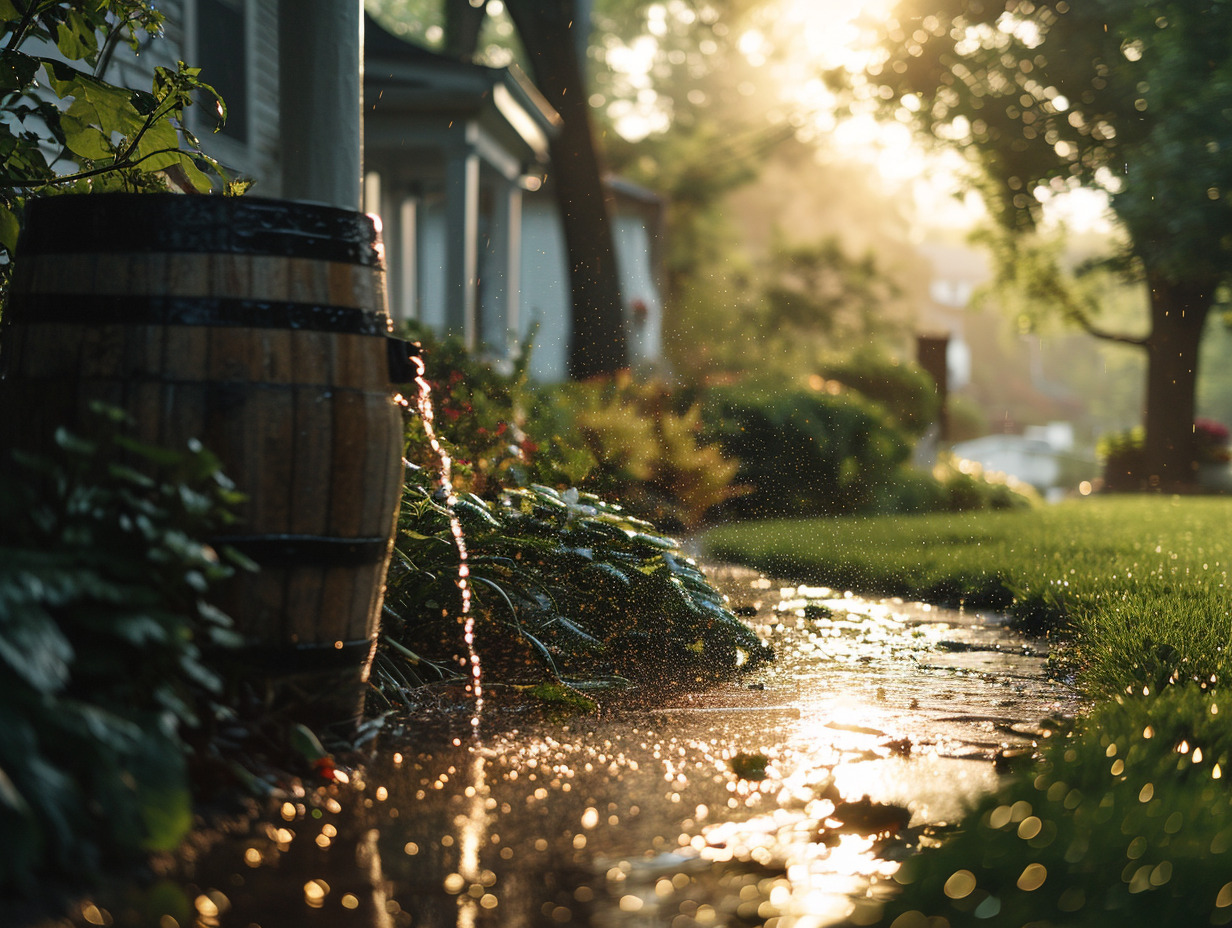
The installation of a rainwater harvesting system requires special attention to collection and storage. The system begins with gutters capturing water that runs off the roof, directing it to a storage tank. Buried or above ground, these tanks are designed to preserve water quality and prevent contamination. The storage capacity must be adapted to the area to be irrigated and the local climate, thus ensuring sufficient water autonomy during dry periods.
The maintenance of the water collector is a crucial step to ensure the longevity of the system and the quality of the water. Regular cleaning of gutters and pre-filters is necessary to avoid the accumulation of plant debris and other sediments. Special attention should be paid to the suction strainer pump, the heart of the irrigation system, which requires periodic checks to ensure its proper functioning and efficiency.
For gardeners demanding impeccable rainwater, the installation of a UV sterilizer proves to be a complementary solution. This device ensures rainwater free of potentially harmful microorganisms for plant health. As for automatic irrigation, it integrates perfectly into this harvesting system, providing optimal water supply for the lawn while rationalizing the use of this precious resource.