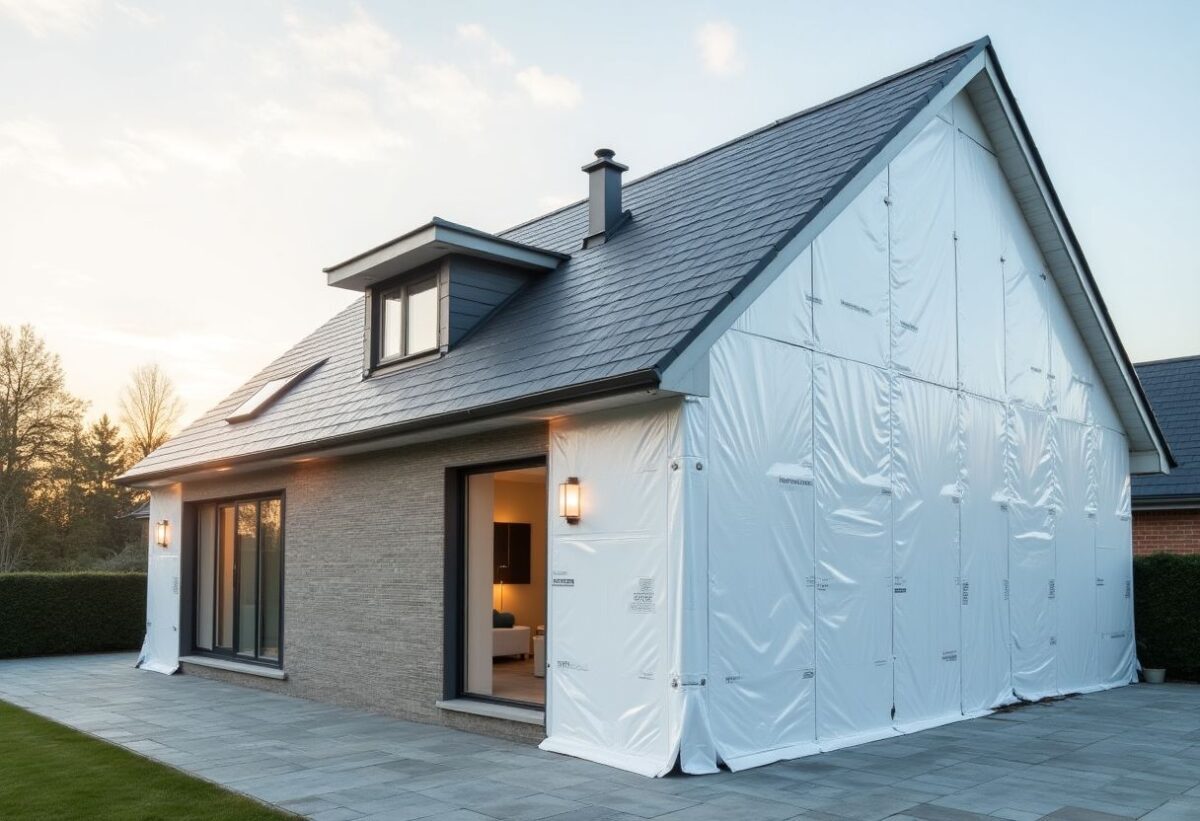
The improvement of energy efficiency in our homes has become a priority for many of us. Faced with ever-increasing heating bills and a growing awareness of environmental issues, building insulation presents itself as an essential solution. Among the various methods available, external insulation has proven to be a particularly effective and popular option. This method not only enhances thermal comfort but also helps reduce your household’s ecological footprint.
The advantages of external insulation
External insulation offers numerous advantages that make it a favored solution among many homeowners.
Firstly, it allows for a significant improvement in the energy efficiency of your home. By insulating your exterior walls, you reduce thermal losses, which translates into a decrease in heating and cooling needs. This reduction can easily be quantified by a drop in your energy bills, an important aspect for the family budget.
Moreover, this method helps preserve the integrity of interior surfaces, thus avoiding the inconveniences associated with work inside your home.
Furthermore, external insulation provides an aesthetic enhancement to your facade. Whether you choose wood, PVC, or composite cladding, the options are vast for transforming the appearance of your house while increasing its value in the real estate market. Finally, this process significantly strengthens acoustic protection, an undeniable asset for those living in noisy environments.
The different techniques for external insulation
There are several techniques for implementing external insulation, each with its specificities.
- Insulation with render: This technique involves applying an insulating material to the facade, covered with a protective render. It is ideal for maintaining a sleek and modern aesthetic while benefiting from excellent thermal protection.
- Cladding system: Another popular method is the cladding system where the insulation is fixed and then covered with cladding. This can be made of wood, metal, or composite materials, thus offering a multitude of possible aesthetic finishes.
- Facade system: A turnkey solution that combines insulation and cladding in one step, thus facilitating implementation and reducing construction time.
Financial and regulatory aspects
Starting an external insulation project requires considering certain financial and regulatory aspects.
From a financial perspective, although the initial investment may seem substantial, it is essential to consider long-term energy savings as well as the various financial aids available. Programs such as the Energy Transition Tax Credit (CITE) or energy bonuses can help reduce the total cost of the project.
Regarding regulations, it is imperative to comply with local urban planning standards and consult the co-ownership rules if applicable. Obtaining the necessary permits before starting work is crucial to avoid future complications.
The choice of materials for successful external insulation
The choice of materials greatly contributes to the effectiveness of your external insulation. Expanded polystyrene, rock wool, and wood fiber are all options to consider based on the specific needs of your building.
- Expanded polystyrene (EPS): Lightweight and economical, EPS is widely used for its thermal performance and ease of installation.
- Rock wool: Known for its thermal and acoustic properties, it also offers excellent fire resistance.
- Wood fiber: An ecological choice that provides excellent thermal insulation while respecting the environment.
A good material should meet your expectations in terms of thermal performance, acoustic properties, and durability, while respecting your budget and desired aesthetics.